Look, I need to call you out on something right off the bat.
You're choosing to be pessimistic. And before you start typing an angry comment about how I don't understand your sit
uation, hear me out. This isn't some toxic positivity bullshit where I tell you to smile through your problems. This is about something more profound.
What Optimism Actually Is (Not What Instagram Tells You)
When I say optimism, I don't mean walking around with a permanent shit-eating grin pretending everything is sunshine and rainbows. That's not optimism—that's delusion.
Optimism, to me, is knowing that everything will be okay.
It's looking at the future with a positive outlook because you genuinely believe that people, at their core, want good things to happen. Yeah, I know that's taking it with a grain of salt because some people are genuinely shitty. But that's how I choose to view the world.
And here's the thing—my optimism has a track record. When people call me "unrealistic" for being optimistic, my first thought is: they don't actually know me. More often than not, my optimistic predictions come true. Not because I'm some mystical fortune teller, but because optimism creates the conditions for good outcomes.
But let me be real with you about something...
I Used to Be an Optimistic Asshole
Growing up, my whole family was optimistic. My dad brought the realism, but we all had this default setting that things would work out. And yeah, I had privileges—not extreme wealth or anything, but I was surrounded by people who loved me, parents who drove me to soccer practice, and a stable home: a normal life, but one with love.
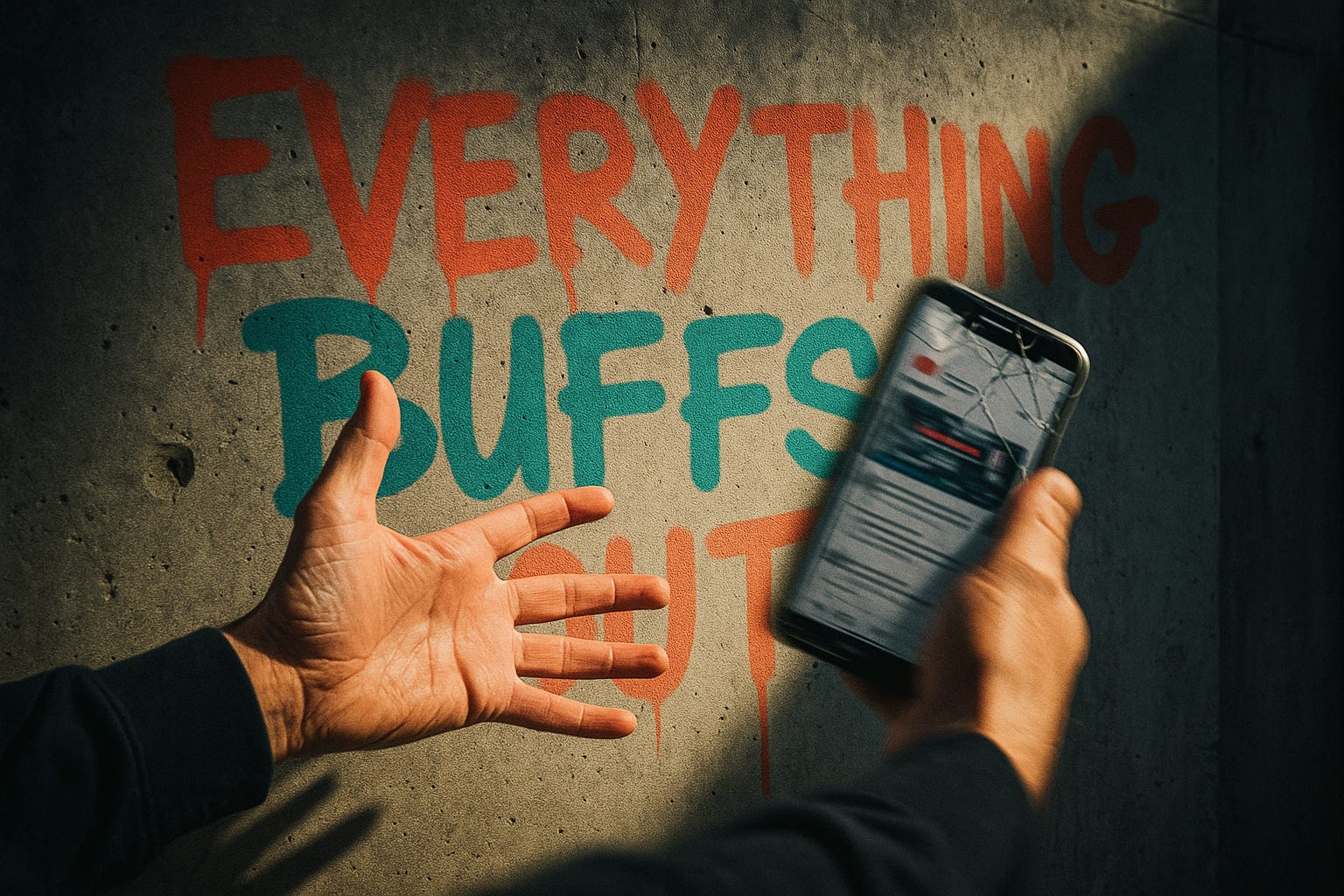
Because things always seemed to work out for me, I became this optimistic asshole who would shrug off other people's problems with an "eh, it'll buff out" attitude.
("Everything buffs out," by the way, comes from middle school. Someone would get kicked in the shin, and we'd be like, "Ah, it'll buff out"—like you're buffing out a scratch on a car. It became my philosophy: no matter what happens, with time and effort, it's gonna be all right.)
However, here's where I had to evolve: my optimism deepened when I developed empathy. This empathy came in the form of education from my Fiancé, Cameron. She has educated me a great deal on the perspectives and thoughts of others. I realized that just because I could see the bright side didn't mean everyone else's darkness wasn't real. My optimism wasn't wrong, but my understanding of why others couldn't access it was seriously lacking.
The Hard Truth About Your Pessimism
Now, let's talk about why you might be pessimistic. And I want you to really think about this shit.
When someone's life is genuinely falling apart and I suggest optimism, I get it—it can sound like privileged bullshit. But here's what I've learned: if your life is falling apart and you can't find anything to be optimistic about, you need to go out and create something to be optimistic about.
I'm not saying "just think positive thoughts." I'm saying: find one thing—your family, an idea you have, the fact that you woke up today—and build from there.
The uncomfortable truth is that people actively choose pessimism because it's easier. Social media and news literally fearmonger us every single day. It's easier to scroll through doom and be scared than to think critically about what you can actually control and improve.
But here's what pessimism gives you that you might not want to admit: it gives you permission not to try. When everything is fucked and hopeless, you don't have to be solution-oriented. You can accept things at face value and stay average.
Optimism, on the other hand, forces you to think in solutions. When something goes wrong, pessimism asks, "How could we ever solve that?" Optimism asks, "Maybe we could try this, or this, or this."
Access the Optimism Self-Assessment Tool →
Optimism: Mindset, Skill, AND Choice
People get confused about what optimism actually is. Let me break it down:
It's a mindset because when shit happens that's entirely out of your control—you roll your ankle, someone cuts you off in traffic, your project gets canceled—you automatically frame it in terms of what's possible rather than what's fucked.
It's a skill because I wasn't always good at finding the bright side in shitty situations. I had to practice. When I rolled my ankle, I had to consciously think: "Okay, how do I think about this positively?" Over time, that became automatic.
It's a choice because those negative thoughts that pop into your head? You don't have to accept them. Most of the pessimistic shit that runs through your mind isn't even yours—it's programming from media, other people's fears, societal expectations. You can choose to reject those thoughts and consciously think something better.
Why Optimism Is Anti-Anxiety (And Enables Everything Else)
Here's something most people don't understand: optimism is the ultimate anxiety killer.
When you're optimistic, you're not spending mental energy worrying about shit you can't control. You're focused on what you can influence and what good might come from it.
But someone's gonna say, "I'm anxious BECAUSE I'm trying to be optimistic and failing." To that I say: you can't fail at being optimistic. You're never going to be positive about everything all the time. That's not the goal. The goal is to make optimism your default mode of processing the world.
Optimism enables everything else in life because it serves as the foundation for action. When you believe things can get better, you actually do the work to make them better. When you're pessimistic, why even try?
Consider it physiologically—your mindset significantly influences how your body responds to stress, healing, and challenges. This isn't woo-woo bullshit; this is documented science. When you're optimistic about your ankle healing in two weeks instead of four, your body often responds accordingly. Read more here.
The Real Talk About Privilege and Perspective
I know what some of you are thinking: "Easy for this guy to say—he probably hasn't faced real shit."
You're right that I haven't experienced some of the deep, profound lows that others have faced. But here's what I've learned: the emotional impact of my challenges might be just as real as yours, even if the circumstances are different.
I've had character-breaking moments. In college, I cheated on my girlfriend through text messages. I'm not inherently a cheater, but in that moment, I was. It felt like the end of the world. I was doom and gloom, convinced I'd lost everything.
But even in that shitty situation, I had to choose optimism. I could stay in the doom spiral, or I could be optimistic about who I could become on the other side of that mistake. I chose to view it as a test of my character that I failed, but also as an opportunity to rebuild my integrity and ensure I never made that mistake again.
The privilege I have around optimism? I created it myself. I know how to get shit done. I know how to stack enough positive things in my life that I can stay optimistic even when shit hits the fan.
And that's something you can create too.
Your Challenge: Stop Choosing Easy
Here's your wake-up call: every time you default to pessimism, you're choosing the easy path. You're choosing to stay average. You're choosing not to be solution-oriented.
Optimism requires work. It requires you to actively reject the fear-mongering bullshit that gets pumped into your brain daily. It requires you to look for solutions instead of marinating in problems.
However, here's the payoff: when you're optimistic, you begin to see opportunities instead of obstacles. You start taking action instead of just reacting. You start building the life you actually want instead of just surviving the one you're stuck in.
Everything Buffs Out (When You Do the Work)
That phrase from middle school—"everything buffs out"—it's not just some naive belief that time heals all wounds. It's recognition that with effort and the right mindset, most things can be fixed, improved, or at least learned from.
However, the key part that everyone misses is the effort component. Everything buffs out when you put in the work to buff it out.
Your financial situation? It can buff out if you develop new skills, change your spending, or create additional income streams.
Your relationship problems? They can buff out if you improve communication, set boundaries, or make different choices about who you let into your life.
Your career dissatisfaction? It can buff out if you pursue alternatives, build new competencies, or start that side project you keep talking about.
The Optimism Framework
If you want to develop genuine optimism (not fake positivity), here's how:
Start small. Find one thing today that you can be genuinely optimistic about. Not fake optimism—real optimism based on evidence or possibility.
Practice the reframe. When something shitty happens, ask yourself: "What's one way this could lead to something good?" Not "how is this actually awesome" but "how could this contribute to a better outcome?"
Take action on your optimism. Don't just think positive thoughts—do something that makes those positive outcomes more likely.
Accept that optimism is work. It's easier to be pessimistic. Acknowledge that and choose optimism anyway.
Build your privilege. Create conditions in your life that make optimism easier to maintain. Better relationships, useful skills, financial cushions, whatever you need to feel more in control.
The Bottom Line
You don't have to stay pessimistic just because the world is feeding you reasons to be scared and sad. You can choose to see possibilities instead of just problems.
And before you tell me I don't understand your situation, you're right, I don't. But I know the choice. I understand that the way you interpret what happens to you matters more than what actually happens to you.
Optimism isn't about ignoring reality. It's about refusing to let reality limit what you think is possible.
Everything buffs out. But only if you're willing to do the buffing.
Ready to examine your own relationship with optimism? Take the self-assessment below and figure out where you really stand—and where you want to go.
Access the Optimism Self-Assessment Tool →
This essay also appears on Substack. Subscribe there to get new essays delivered to your inbox.
Enjoyed this? New essays published regularly — drop your email and Substack delivers them straight to your inbox.