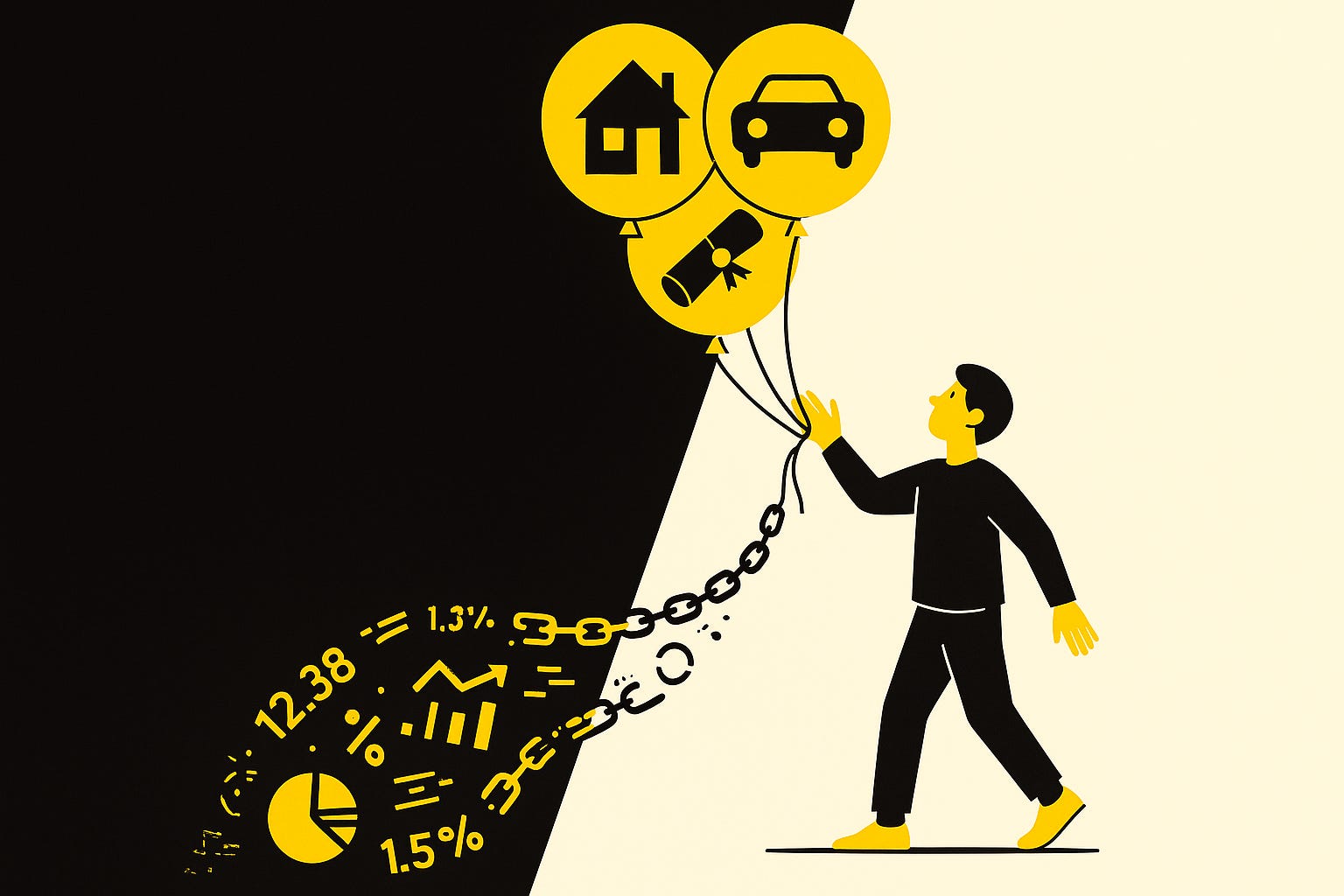
The economic reality check every young adult needs to hear
Picture this: Your grandpa walks into a store, orders everything he wants, then hands you the bill when it's time to pay.
That's literally what's happening to our generation right now. And everyone's acting like it's totally fine.
I've been digging deep into the numbers behind why young adults feel financially constrained in 2025. And honestly? The data is more fucked up than I thought.
But here's the thing – understanding what's actually happening is the first step to designing a life that works for YOU. Not the system that's been designed to keep you struggling.
Let's break down the real reasons your money doesn't stretch like it should. And more importantly, what you can do about it.
The Debt Bomb That's About to Explode in Our Faces
Here's a stat that'll piss you off: If you're 20 years old right now, you're looking at an additional $294,000 in lifetime taxes just to service the debt older generations are racking up.
The Penn Wharton Budget Model breaks down exactly how they calculated this figure. They used generational accounting with present value calculations to compare the current policy baseline ($131,600 lifetime net taxes) versus an across-the-board policy adjustment ($425,600 lifetime net taxes). The difference? That $294,000 additional burden falls squarely on our shoulders.
The math:
Fiscal adjustment needed: 14.6% across-the-board increase in all federal taxes plus an equal reduction in expenditures
Total federal imbalance: $162.7 trillion infinite horizon fiscal imbalance
Alternative scenarios: Tax-only adjustment increases burden by $357,000; expenditure-only by $245,000
Think about that for a second.
You didn't vote for these policies. You weren't even alive when most of this debt was created. But you're the one who's going to pay for it.
The national debt is sitting at levels that would make a 2008 banker blush. We're talking about debt-to-GDP ratios hitting 118% by 2035 – higher than we saw after World War II.
And here's the kicker: The government is already spending $892 billion annually just on interest payments. That's more than we spend on defense. More than we spend on education. It's just... gone. Poof. Into the pockets of bondholders.
The unfunded obligations for Social Security and Medicare? Try $65.7 trillion.
That's not my opinion. That's straight from the Penn Wharton Budget Model.
So when people tell you that national debt "doesn't matter" or that we'll "grow our way out of it," they're either lying or they don't understand math.
We're literally taking out a loan in your name, without asking, and expecting you to pay it back with interest.
The Stock Market Is Lying to You About the Economy
Remember when everyone was celebrating how "strong" the economy is?
Yeah, that's bullshit.

Here's what's happening: Just 10 companies are driving almost 40% of the entire S&P 500's performance. That's the highest concentration we've seen in over 145 years. Higher than the dot-com bubble. Higher than any period in modern history.
So when you see headlines about "record stock market gains," what you're seeing is NVIDIA, Microsoft, Apple, and a few other AI companies doing well. The other 490 companies in the S&P 500? They're mostly treading water.
This matters because your 401 (k), your pension, all those "diversified" funds you're told to invest in? They're not diversified at all. They're betting the farm on a handful of tech companies.
And get this – 76% of NVIDIA's employees are now millionaires because of stock options. About half of them have over $25 million.
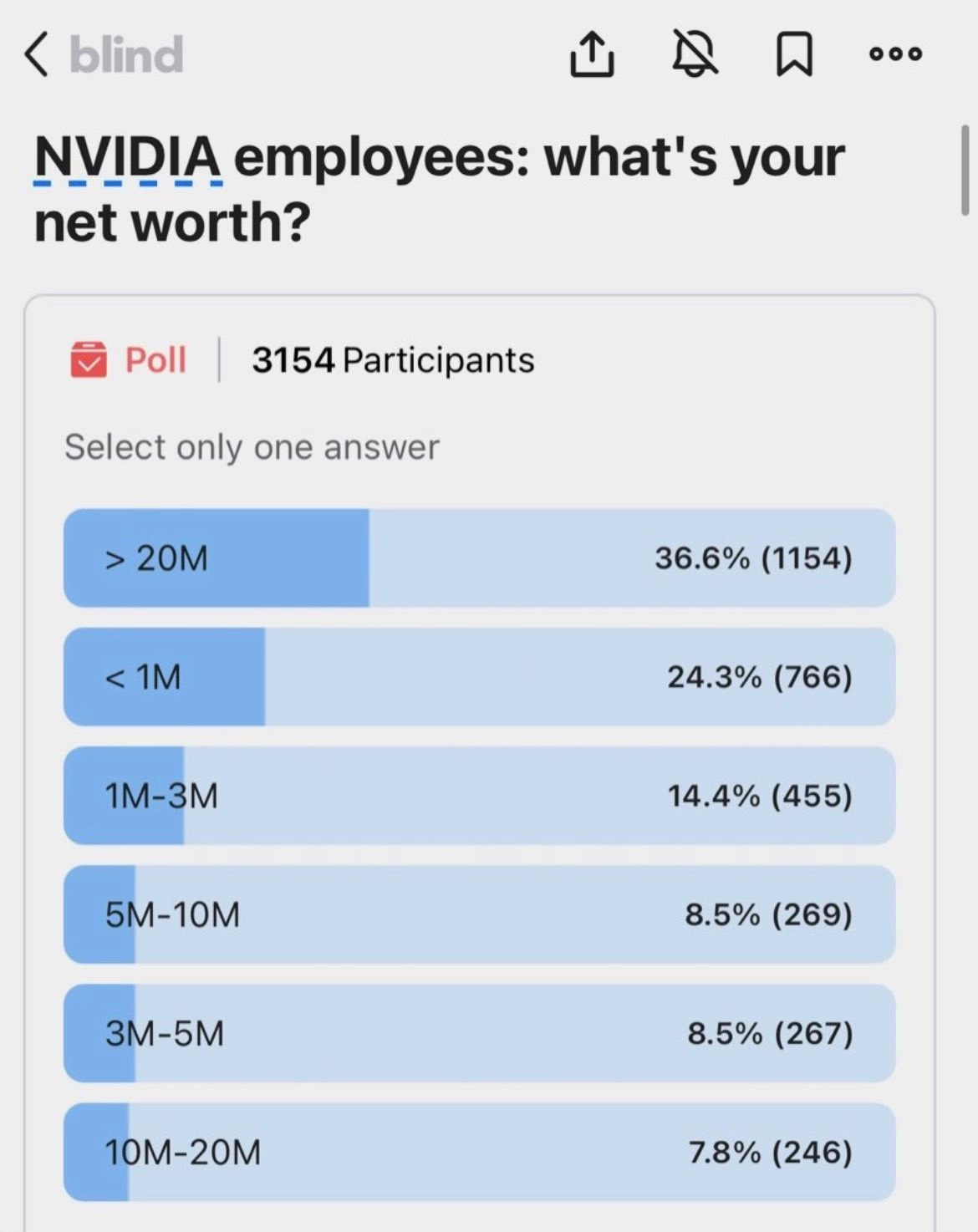
Good for them. But that also means unless you're working at one of these AI darlings, you're not seeing any of this "economic growth" in your actual life.
It's like watching other people get rich while you're stuck with the same paycheck, wondering why everything costs more but your bank account looks the same.
Your Dollar Buys 25.7% Less Than It Did Five Years Ago
Let's talk about the elephant in the room: inflation.
Since 2019, your purchasing power has dropped by 25.7%. That means if you were making $50,000 five years ago, you'd need to make about $62,850 today to maintain the same lifestyle.
Here's the exact math using official Bureau of Labor Statistics data:
2019: 2.3% inflation
2020: 1.4% inflation
2021: 7.0% inflation
2022: 6.5% inflation
2023: 3.4% inflation
2024: 2.9% inflation
Compound that: (1.023 × 1.014 × 1.07 × 1.065 × 1.034 × 1.029) = 25.7% cumulative inflation
But here's what really pisses me off – wages haven't kept up proportionally. Sure, there's been some wage growth recently. But for most people, their paychecks haven't grown fast enough to match the actual cost of living now.
Eggs are up 170% (thanks, avian flu). Food prices are up 25-30% across the board. Housing list prices jumped 37.5%.
Meanwhile, you're supposed to be grateful that your salary went up 3%.
Do the math. It doesn't add up.
And this isn't some temporary thing. This is the new normal. Companies have figured out they can charge more, so they do. Landlords know you need somewhere to live, so they jack up rent. Everyone's got their hand in your pocket.
The result? You're working harder than ever, but feeling like you're falling behind because you are.
The Housing Market Has Gone Completely Insane
Here's a number that should make you angry: Only 24% of home buyers are first-time buyers. That's a historic low.
The average home buyer is now 56 years old. Not 30. Not 35. Fifty-six. First-time buyers average 38 years old – an all-time high.
The median home price is sitting at $400,000. For a first-time buyer, that means coming up with about $36,000 for a down payment (9% median for first-time buyers). Plus closing costs. Plus inspections. Plus all the other bullshit fees that add up fast.
And even if you can scrape together the down payment, you're competing against cash buyers who make up 26% of all purchases. Good luck outbidding someone who can close in a week with no financing contingencies.
This isn't a housing market. It's a fucking auction for rich people and investment firms.
Meanwhile, 31% of Gen Z adults are living at home because they literally can't afford to move out. And society acts like that's a personal failing instead of a systemic breakdown.
College Debt vs. Reality Check
Let's be real about student loans for a second.
Look, I'm going to say something that might piss some people off: Part of the student debt crisis is on us.
Yes, the system is fucked. Yes, colleges have zero skin in the game when they're collecting tuition upfront. But we also need to own the fact that signing up for $200,000 in debt to study something with no clear career path is a choice that requires better self-education.
The average federal student loan debt is $39,075. Total student debt in the US? $1.8 trillion. That's trillion with a T.
Here's what's broken about the system: Colleges get paid whether you get a job or not. Whether your degree is worth anything or not. Whether you can pay back the loans or not. It's like buying a car where the dealer gets paid whether the car runs or not.
But here's what's on us: Not doing the math before signing those loan documents. Not researching job prospects. Not considering alternatives.
The comprehensive FREOPP analysis shows that college degrees still provide decent returns – about 681% over a lifetime on average. But that's an average. And averages hide massive variation.
Programs with strong ROI:
Engineering: Median ROI $949,000; starting salaries $57,000-$70,000+
Computer Science: Median ROI $652,000; starting salaries $55,000-$75,000+
Nursing: Median ROI $619,000; starting salaries $45,000-$65,000+
Programs with negative/low ROI:
Fine Arts: Often negative ROI; starting salaries $25,000-$35,000
Education: ROI <6%; starting salaries $28,000-$38,000
Meanwhile, credit card debt is exploding because people are borrowing to maintain lifestyles they can't afford. Young adults (20-30) average $3,456 in credit card debt, while millennials (30-40) carry $6,932.
Total credit card debt has grown 30% since pre-pandemic to $1.21 trillion, with interest rates hitting record highs near 23%.
This is the dangerous flip side – instead of taking on debt for education or assets, people are borrowing for consumption. That's a recipe for financial disaster.
Alternative paths are looking better every day. Trade jobs average $61,900 nationally, with many positions hitting $85,000+. Plus, you can start earning while your college friends are still accumulating debt.
The technical trades certificates have a median ROI of $313,000 – higher than many bachelor's degrees.
The old "go to college, get a good job, buy a house" playbook is broken. Time to write a new one.
The Government Budget Circus
Want to know how seriously our government takes fiscal responsibility?
They haven't passed a real budget since 1997.
That's 28 years of just winging it with "continuing resolutions" – basically saying "eh, let's just spend the same as last year and figure it out later."
Congress has completed appropriations on time only 3 times in 47 years. They've enacted 47 continuing resolutions from FY 2010-2022 alone.
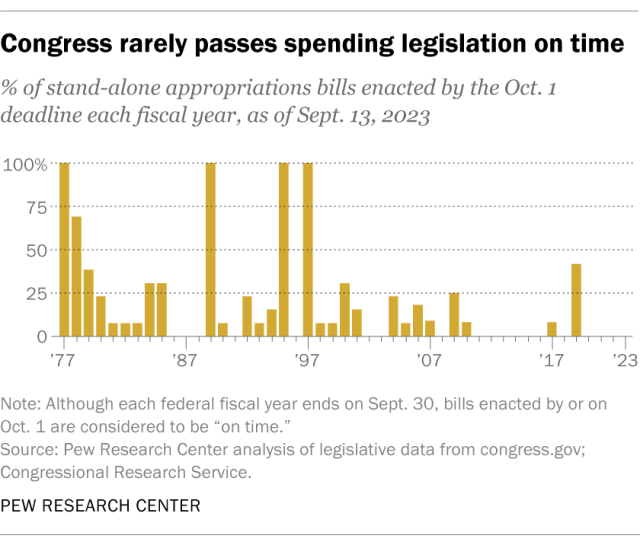
Imagine running a business like this. Imagine running your personal finances like this. You'd be bankrupt in six months.
But somehow, when the government does it, it's just "how things work."
This isn't just incompetence. It's a feature, not a bug. Because if you never have to create a real budget, you never have to make hard choices about priorities. You can just keep spending and pretend the bill will never come due.
Except the bill always comes due. And guess who's holding it?
Why This Actually Matters for Your Life
Look, I'm not trying to depress you. I'm trying to wake you up.
Because once you understand what's really happening, you can stop blaming yourself for struggling financially and start making moves that actually work in this environment.
Here's what I've learned from digging into all this data:
The traditional path is fucked. The "work hard, save money, follow the rules" approach assumes a functioning system that rewards merit and effort. But when the game is rigged, playing by the old rules makes you a chump.
My Current Working Solution: Have a job that pays me a secure monthly salary with minimal required effort. Leverage time savings to expand skillset. Acquire jobs in areas of interest for free or very cheap in terms of your comp in exchange for experience and exposure. Save, expand luck surface area, increase income.
You need to think differently about money. When your dollar is losing value every year, traditional saving strategies don't work. You need assets that hold value. You need income streams that aren't tied to a single employer.
My Current Working Solution: Save in a HYSA (High Yield Savings Account) for a down payment and an emergency fund. Move all other savings from the checking account to the investment thesis below (Not financial advice), to capitalize on growth areas over my investment time horizon of the next 5-10 years in higher risk plays.
Community matters more than ever. When the system is designed to keep you struggling, connecting with other people who get it becomes crucial. Share resources. Share knowledge—share opportunities.
My Current Working Solution: Finding like-minded individuals where you can openly discuss these topics and others with. People who discuss ideas, intentions, and growth mindset themes.
Debt isn't automatically bad. When the government is printing money and inflation is eating your purchasing power, sometimes debt can work in your favor. But you'd better know what you're doing.
My Current Working Solution: I like debt; I am a fan of it, but I am also extremely educated on playing the game of debt. You should be too, I am not advising on the matter due to the variance in understanding debt. Educate, then execute a plan.
Location flexibility is power. If housing costs are insane where you live, maybe it's time to move. Remote work has opened up options that didn't exist five years ago.
My Current Working Solution: Remote work, a 9-5 entirely remote job, and gig economy work that is fully remote. Ideally, I would like to find a job in Pittsburgh (Where I live) to be hybrid or full-time, but that is for when I really start building my Career. My current 20s are for experience, opportunity surface area, and networking/skill acquisition.
What I am Doing About It
I am educating myself on the issues facing me. The issues that I need to speak up about—with facts, figures, and supportive documentation.
Not only am I learning about the issue and problem, but I am also actively seeking solutions.
Finding ways to implement thought, ideation, and action-based thinking into my proposals. Flushing out ideas with friends, showing interest in the topic to others, and being a voice for the change that needs to happen.
I am learning about the diversification of asset classes in my portfolio. Where can I realize some of the gains outside of direct investment in the AI companies?
I am looking into energy infrastructure stocks. Energy stocks/sector in general. Nuclear, hydro, etc. Companies that are building today's solutions for tomorrow’s problems.
I am learning about the fundamentals of AI. I am implementing it into my life, using it, and considering how it affects and operates.
I am learning, improving, and being someone who gives a fuck about the future generations.
We are the change.
What You Can Do About It
Here's some practical shit you can start today:
Get educated about money. Not the financial advisor bullshit. Real education about how money works, how inflation works, how markets work. You can't navigate a rigged game if you don't understand the rules.
Build multiple income streams. The days of relying on a single employer for financial security are over. Side hustles, freelance work, passive income – diversify your revenue like your life depends on it.
Invest in yourself aggressively. Skills that can't be outsourced or automated. Skills that solve real problems for real people. Skills that travel with you anywhere.
Network like crazy. Not fake networking. Genuine relationships with people who are building things, creating value, and thinking differently. Your network is your net worth isn't just a saying – it's a survival strategy.
Think long-term but act short-term. Have a 10-year vision but make decisions that improve your situation in the next 90 days.
Question everything. Just because "that's how it's always been done" doesn't mean it's how it should be done. Especially when "the way it's always been done" is clearly not working.
The Bottom Line
Young adults feel financially constrained in 2025 because the system is designed to transfer wealth from young people to older generations. The debt burden, the housing market, the concentrated stock market gains – it's all part of the same pattern.
But here's the thing: understanding the problem is half the battle.
You can't fix a rigged system by playing harder within it. You fix it by playing a different game entirely.
That might mean moving somewhere cheaper. It might mean starting a business instead of getting a job. It might mean learning skills that make you location-independent. It might mean building wealth through non-traditional methods.
The point is, you have more options than the system wants you to believe.
The traditional path of going to college, getting a job, buying a house, and retiring at 65 worked when the numbers added up. But the numbers don't add up anymore.
So stop trying to force a broken equation and start writing your own.
Because while everyone else is complaining about how hard things are, you can be busy building a life that actually works.
The system might be rigged. But you're not stuck in it.
Time to choose none of the above.
What resonated with you most in this breakdown? Please drop a comment and let's keep the conversation going. And if you found this helpful, share it with someone who needs to hear it.
This essay also appears on Substack. Subscribe there to get new essays delivered to your inbox.
Enjoyed this? New essays published regularly — drop your email and Substack delivers them straight to your inbox.