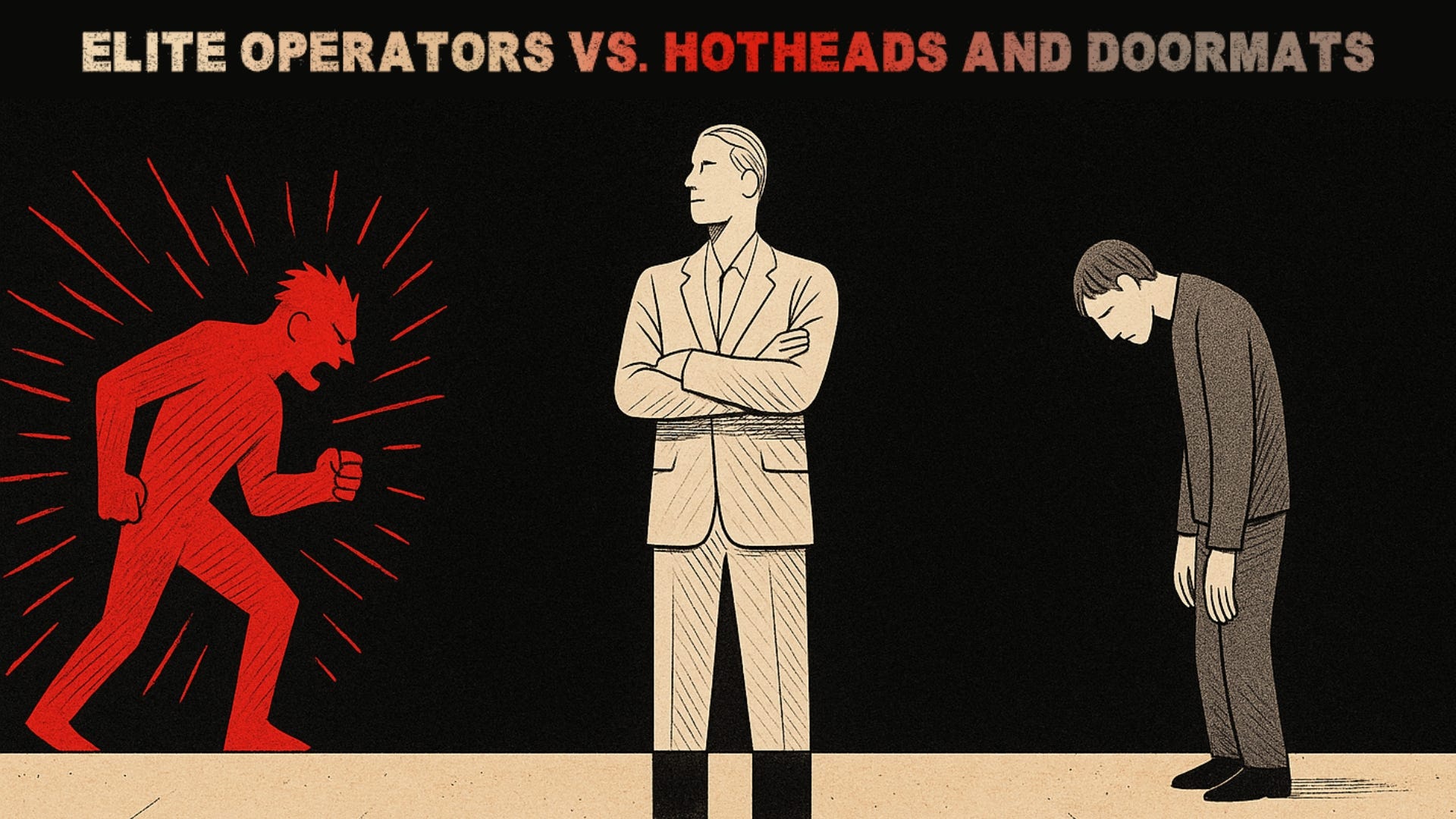
Here's the brutal truth: Most people are controlled by their feelings. They make decisions based on how they feel in the moment, not on what needs to get done.
Elite operators? They've figured out something different. They've learned to remove all optionality except the agreed-upon result. Everything else - their emotions, their wants, their vices - gets stripped away if it doesn't serve
the end goal.
This isn't about suppressing emotions or becoming some robotic corporate drone. This is about choosing your response to life instead of letting life control you.
The Problem With How People Handle Feedback
Let me be straight with you: Don't be a bitch about feedback.
When someone gives you criticism - whether they deliver it well or poorly - you have two choices:
Get emotional about it ("They don't like my work, they don't understand me, they're being mean")
Extract the helpful information and improve that thing
Most people choose option 1. They get attached to how the feedback makes them feel instead of focusing on what it tells them about the result.
Here's what I've learned: Other people have a way better perspective on what you suck at compared to you. They see you from the outside. You see yourself through your emotional lens.
When you handle criticism like a pro instead of getting emotionally distraught, people can tell you exactly how to improve without walking on eggshells. You rapidly accelerate your growth because you become someone who receives feedback well.
Using Emotions as Fuel, Not Control
Don't get me wrong - emotions aren't the enemy. They're fuel.
If you feel passionate about a goal, that passion creates anticipation and excitement for the actions you need to take. It keeps you from getting bored or disconnected from the work.
When you're angry that something isn't working? Good. That anger is data. It means you need to change how you're approaching the problem, not quit. You need to find a new avenue, a different perspective.
The frustration and excitement you feel? That should drive you to try new things and get closer to the goal. But - and this is crucial - you're not making decisions based on those emotions. You're using them as energy while staying focused on the result.
The Social Media Delusion
Here's why this matters so much to me: People today see polished, finished products on social media constantly. They see the end result of everything.
They don't see the emotions, frustration, and anger that go into building something people actually want. They don't know the background work. They think everything should be smooth and polished.
That's not reality, homie.
Real life is the highest highs and the lowest lows. You're going to feel different every single day, but you're still pursuing the same goal with the same actions.
The people who succeed learn to operate regardless of how they feel.
What Happens When You Stay Emotionally Reactive
People who never learn emotional regulation? Their emotional brain overtakes their logical brain. They make decisions based on how they feel, rather than facts or results.
You end up emotionally attached to your role and how it makes you feel, rather than the final result. You have high highs and low lows every day. That's not sustainable.
Your body stays in this high-stress, high-cortisol state where you're always thinking emotionally instead of logically. You're always in a state of panic, never in a state of "I have all the cards. I control this. Let's see how I can get a result."
Reading and Leading Others' Emotions
When you become a leader, you have to be able to read people. You need to see their emotions, how they're reacting to what you're telling them, what they want, and how they want it.
Here's what this looks like in practice:
You tell someone they have something due in 3 days. Are they scared? Excited? Do they think they can do it? All of those reactions change how you deliver your following message.
If they look scared: "How are you going to get this to me in 3 days?"
"I don't know. I don't have anything in place."
"Okay, let's push this out to 5 days. In 3 days, give me a standard operating procedure that will let you get this to me in 1 day in the future. Can you do that?"
You're reading their emotional state and adjusting your approach. That's what authentic leadership looks like.
The Real Transformation
This isn't just about workplace skills. This is about the fundamental difference between being led and leading.
Most people react to things because they're learning about them for the first time or hearing opinions different from theirs.
Elite operators? They're so clear on their final goal that they don't react - they choose. They choose which tasks to focus on, which actions to take, and how to respond when people react to them.
The transformation I'm talking about is taking you from someone who is reactionary, who doesn't think ahead, who has low agency - and turning you into someone who leads, who chooses their responses, who thinks meticulously about what they want out of life.
When you become that person, you can help others navigate their own emotions. You can emotionally regulate others because you've mastered regulating yourself.
That's what separates elite operators from hotheads and doormats.
Remove Everything That Doesn't Serve the Result
Elite operators remove optionality. They strip away distractions - social media, other people's successes, decision fatigue about what to wear or eat.
Look at someone like Zuckerberg wearing the same clothes and eating the same food. They're operating at such a high level of efficiency that these things don't factor into their mental bandwidth.
For me, my house has to be consistently clean for me to operate at a high level. Everything in the right spot, everything in the right place. Then I can sit down with ease of mind and a clear head, knowing nothing else needs to be done.
Find what you need to remove. Strip away everything that doesn't serve your end result.
The Bottom Line
You have a choice every single day: React to life or choose your response to life.
Elite operators choose. They remove emotions from decisions while using emotions as fuel. They focus on results, not feelings. They lead others by reading and regulating emotions instead of being controlled by them.
Everyone else? They stay hotheads and doormats, controlled by whatever they're feeling in the moment.
Which one are you going to be?
What's the hardest thing you've had to remove to stay focused on your goals? Hit reply and let me know - I read every response.
This essay also appears on Substack. Subscribe there to get new essays delivered to your inbox.
Enjoyed this? New essays published regularly — drop your email and Substack delivers them straight to your inbox.